The logistics sector has been more and more reliant on the use of connected technology. Increasing demands from customers, complex supply chains, rising fuel costs, and the need for visibility have led to the encouragement of companies replacing their outdated approaches with digital integration.
For any organization that is operating in the United States, logistics software has the ability to integrate transportation, fleet, warehouses, and supply chain operations.
If an organization intends to develop a logistics management platform, then there are certain factors that need to be considered.
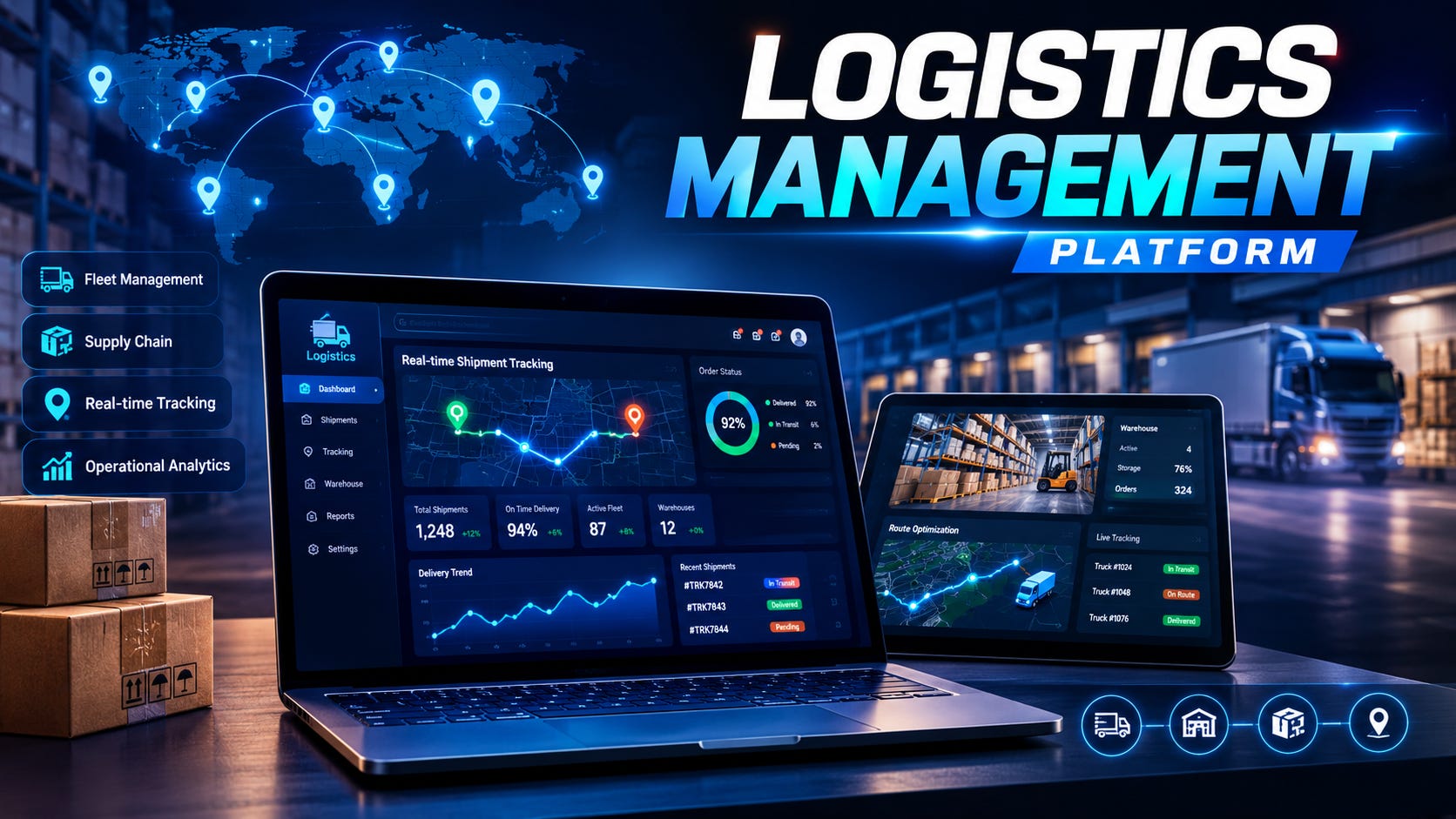
What Is Logistics Management Software?
Logistics management software is a digital solution designed to coordinate and monitor transportation and supply chain operations.
Depending on the business model, a platform may manage:
Transportation
Fleet operations
Drivers
Shipments
Orders
Warehouses
Routes
Deliveries
Customers
Payments
Analytics
The goal is to reduce manual processes and provide teams with better visibility into day-to-day operations.
1. Transportation Management System (TMS)
A TMS is often the core of modern transportation operations.
It can help businesses manage:
Shipment planning
Carrier management
Freight scheduling
Route planning
Dispatch
Delivery tracking
Transportation costs
A well-designed TMS can give logistics teams a centralized view of transportation activity.
2. Fleet Management
Fleet functionality helps businesses monitor vehicles and their operational performance.
Useful capabilities include:
GPS tracking
Vehicle utilization
Fuel monitoring
Maintenance scheduling
Mileage tracking
Driver assignments
Vehicle inspections
For companies managing large fleets across the USA, centralized fleet visibility can make day-to-day decision-making more efficient.
3. Real-Time Shipment Tracking
Customers and operations teams increasingly expect accurate shipment visibility.
A logistics platform can provide information about:
Current shipment location
Delivery status
Estimated arrival time
Route progress
Delivery exceptions
Real-time tracking can also help businesses respond more quickly when delays occur.
4. Route Optimization
Poor route planning can increase fuel consumption, delivery times, and vehicle utilization costs.
A logistics platform can optimize routes based on:
Distance
Traffic conditions
Delivery windows
Vehicle capacity
Driver availability
Multiple stops
Advanced solutions can use real-time data to recommend route adjustments when conditions change.
5. Driver Management
Drivers play a central role in transportation operations.
A dedicated driver module can support:
Driver profiles
Job assignments
Scheduling
Communication
Delivery confirmation
Performance monitoring
Document management
A mobile application can also give drivers access to relevant delivery information while on the road.
6. Supply Chain Visibility
Modern logistics operations often involve multiple stakeholders.
A connected platform can bring information from transportation, warehouses, suppliers, carriers, and customers into a unified environment.
This can help businesses identify:
Delays
Inventory movement
Shipment bottlenecks
Capacity issues
Delivery exceptions
Better visibility can support more informed supply chain decisions.
7. Warehouse and Inventory Integration
Logistics and warehousing are closely connected.
Integrating warehouse functionality with transportation systems can help synchronize:
Inventory
Orders
Picking
Packing
Dispatch
Delivery
This reduces information gaps between warehouse teams and transportation departments.
8. Automated Notifications
Customers and logistics teams should not have to manually check every shipment.
Automated notifications can provide updates about:
Order confirmation
Dispatch
Shipment progress
Delivery schedules
Delays
Successful delivery
Notifications can be delivered through email, SMS, push notifications, or in-platform messaging, depending on the system.
9. Analytics and Reporting
Data can help logistics companies understand how efficiently their operations are performing.
A reporting dashboard can track:
Delivery times
Fuel costs
Fleet utilization
Driver performance
Shipment volumes
Route efficiency
Transportation expenses
These insights can help managers identify inefficiencies and plan improvements.
10. Secure API Integrations
Logistics companies rarely operate with a single software system.
A modern platform may need to connect with:
ERP systems
Warehouse management systems
Accounting software
GPS providers
Payment gateways
E-commerce platforms
Customer relationship management systems
API integrations can help automate data exchange between different business applications.
What Features Should a Logistics Platform Include?
A complete logistics solution may include several connected modules.
ModuleKey FunctionsTMSShipment planning, dispatch, carrier managementFleetGPS, maintenance, fuel, vehicle monitoringDriverAssignments, schedules, delivery updatesSupply ChainShipment and operational visibilityWarehouseInventory and fulfillment integrationCustomerTracking and notificationsAnalyticsReports, KPIs, operational insightsAdminUsers, permissions, configurations
Not every business needs every module from the beginning. The platform should be built around its actual operational requirements.
How Does Logistics Platform Development Work?
A structured development process can help businesses manage complexity.
Step 1: Business Analysis
Identify operational challenges, users, workflows, integrations, and business objectives.
Step 2: Feature Planning
Prioritize essential functionality for the initial version.
Step 3: UI/UX Design
Create interfaces for administrators, dispatchers, drivers, and customers.
Step 4: Backend Development
Develop databases, APIs, business logic, authentication, and integrations.
Step 5: Mobile Development
Build driver and customer applications when mobile access is required.
Step 6: Integration
Connect GPS, ERP, warehouse, payment, and other required systems.
Step 7: Testing
Conduct functional, performance, security, integration, and usability testing.
Step 8: Deployment and Optimization
Launch the platform, monitor performance, collect feedback, and introduce improvements.
How Much Does Logistics Software Development Cost?
There is no single development price because logistics platforms vary considerably in complexity.
A basic solution with shipment management and tracking will generally require less investment than an enterprise platform combining TMS, fleet management, warehouse integration, AI-powered optimization, analytics, and multiple mobile applications.
Major cost factors include:
Number of features
Platform complexity
Mobile and web requirements
Third-party integrations
GPS and mapping services
Cloud infrastructure
Security requirements
Development team
Customization level
Businesses should also account for ongoing expenses such as hosting, API usage, maintenance, security monitoring, and infrastructure scaling.
Why Scalability Matters in the USA
The logistics environment in the USA involves extensive transportation networks and geographically distributed operations. A platform that performs well for a small regional fleet may need significant additional capacity as shipment volumes and service areas expand.
Scalable architecture can support:
More vehicles
Additional drivers
Higher shipment volumes
New warehouses
Additional customers
Multiple business locations
Cloud-based infrastructure and modular software architecture can make future expansion easier.
Security and Compliance Considerations
Logistics platforms can process customer information, employee data, business records, payment information, and operational data.
Important safeguards may include:
Role-based access
Multi-factor authentication
Data encryption
Secure APIs
Audit logs
Backup systems
Activity monitoring
Businesses should also evaluate applicable privacy, transportation, employment, and industry-specific requirements based on their operations and locations.
How AI Can Enhance Logistics Software
AI and machine learning can add another layer of intelligence to logistics platforms.
Potential applications include:
Predictive delivery estimates
Demand forecasting
Route optimization
Predictive vehicle maintenance
Automated document processing
Exception detection
Intelligent dispatching
However, AI should be introduced where it solves a measurable business problem rather than simply being added as a technology trend.
Final Thoughts
Logistics companies in today’s world require more than just the ability to track their shipments. They need integration of systems that would integrate transportation, fleets, drivers, warehouses, customers, and logistics-related data.
For companies that wish to develop a logistics management platform, a feasible approach would be to start with those processes that will make the most difference and add functionality based on business needs.
A properly designed logistics platform will ensure greater visibility, automation of processes, effective decision-making, and a solid foundation for growth in the USA logistics space.
To know more about this platform development, click the link below and watch the video.